
Say "mid-century modern" and most people picture Palm Springs: butterfly roofs, breeze blocks, and a swimming pool the color of a mint. Palm Springs earned that reputation. But it also swallowed most of the attention, and that has left dozens of thriving MCM neighborhoods across the rest of the country in the shade.
The West and Southwest are full of them. Some were built by celebrated architects working far from the coast. Others were mass-produced by ambitious local builders who believed good modern design belonged to everyone, not just the wealthy. All five neighborhoods below are still standing, still cohesive, and still home to people who love them. Here is where to look.
1. Oak Hills, Beaverton, Oregon (Portland metro)
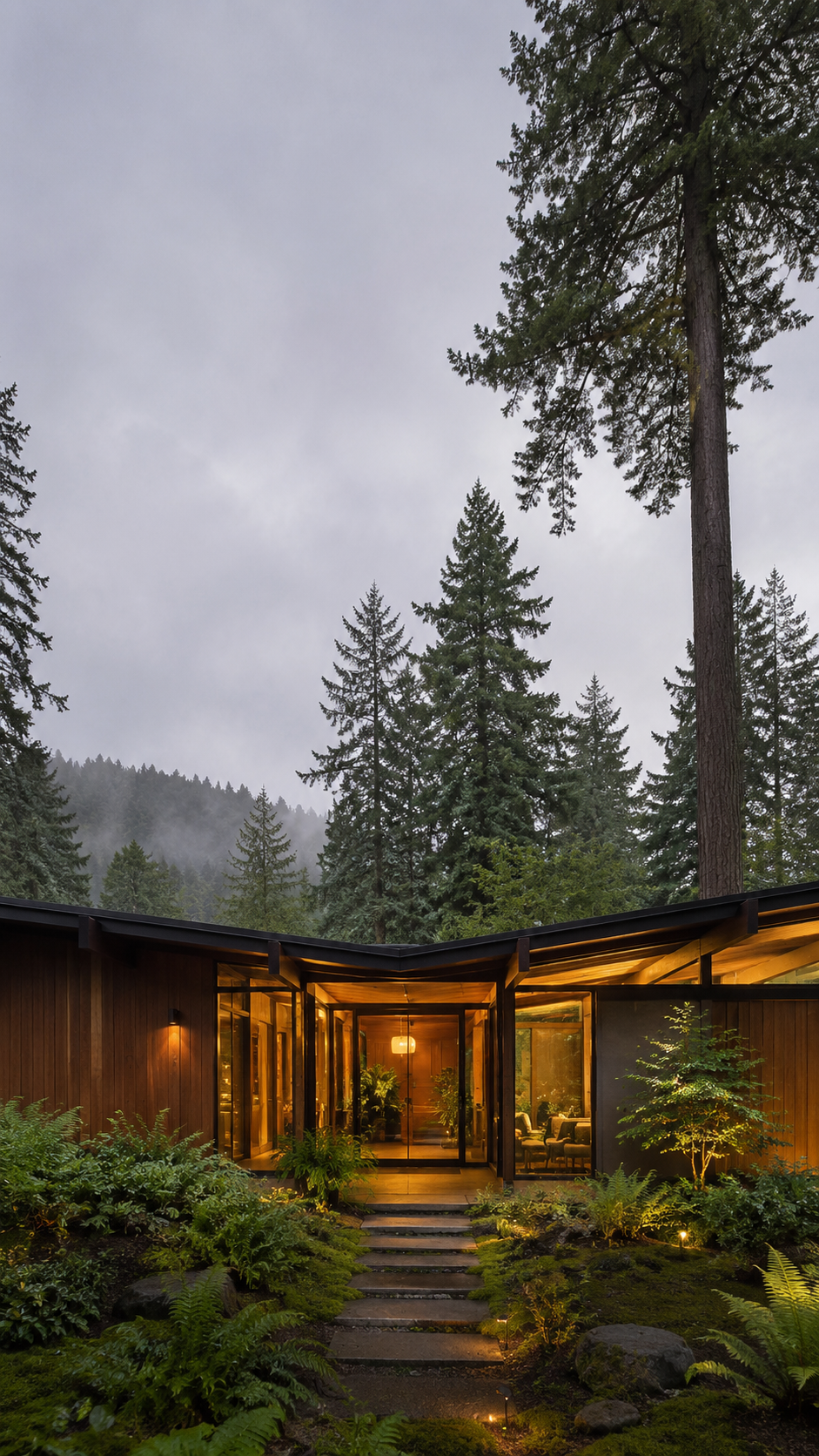
If you want to understand why Oregonians get emotional about a builder named Bob Rummer, start in Oak Hills. Robert Rummer built Eichler-inspired homes across the Portland area, and this planned community holds one of the largest concentrations of them anywhere. Post-and-beam construction, interior atriums, exposed beams, and walls of glass: these are, for all practical purposes, Oregon's Eichlers.
Oak Hills was built mostly between 1965 and 1974 as a full "village concept" community, with pools, tennis courts, trails, a school, and a church all planned in from the start. About 81 percent of the roughly 650 homes came from two developer catalogs, and a homeowners association has kept the vast majority in their original wood sheathing for sixty years. Oregon recognized the neighborhood as its first designated mid-century modern historic district, adding it to the National Register in 2013.
Here is the part collectors love: Rummers rarely come up for sale. When one does, it tends to cause a small frenzy. This is a neighborhood that residents move into and simply do not leave.
2. Harvey Park, Denver, Colorado
Cliff May is the man usually credited with inventing the California ranch house. So it surprises people to learn that the largest collection of authentic Cliff May homes outside California sits in southwest Denver.
Locals affectionately call the enclave the "Mayborhood." Beginning in 1954, builder D.C. Burns erected around 170 of May's patented panelized prefab designs here, the low-slung "Low Cost Ranch Homes" with window walls, open plans, and private courtyards built for indoor-outdoor living. They sit within the broader Harvey Park, where roughly 450 homes date to the mid-century era in total.
For years this was Denver's affordable modernist secret. That is changing fast. Preservation-minded realtors and Denver Modernism Week have put the Mayborhood firmly on the enthusiast map, and demand now runs strong among both younger buyers and downsizing boomers. It remains one of the best stories in American modernism: a genuine Cliff May tract, a thousand miles from the coast, that most people have never heard of.
3. The Phoenix "Haverhoods," Arizona
Phoenix had its own Eichler, and his name was Ralph Haver. An architect who practiced from the 1940s into the 1980s, Haver designed thousands of affordable, architect-drawn tract homes that still blanket the Valley. Fans call the neighborhoods where they cluster the "Haverhoods."
Rather than one single subdivision, think of the Haverhoods as a program spread across many tracts, with names like Windemere, Marlen Grove, and Hoffmantown. The signature look is unmistakable: low-sloped rooflines, clerestory windows, big mantle-less chimneys, floor-to-ceiling glass, and clinker-brick detailing. Haver's firm estimated it designed roughly 20,000 homes across the Southwest, with more than 6,000 attributed to metro Phoenix alone.
Because these homes were built to be expanded and personalized, many have been altered over the decades, which makes an original, intact Haver a real find. Buyers know it, too. Specialists report that a genuine Haver commands a meaningful premium over an ordinary ranch of the same age sitting right across the street.
4. Princess Jeanne Park, Albuquerque, New Mexico
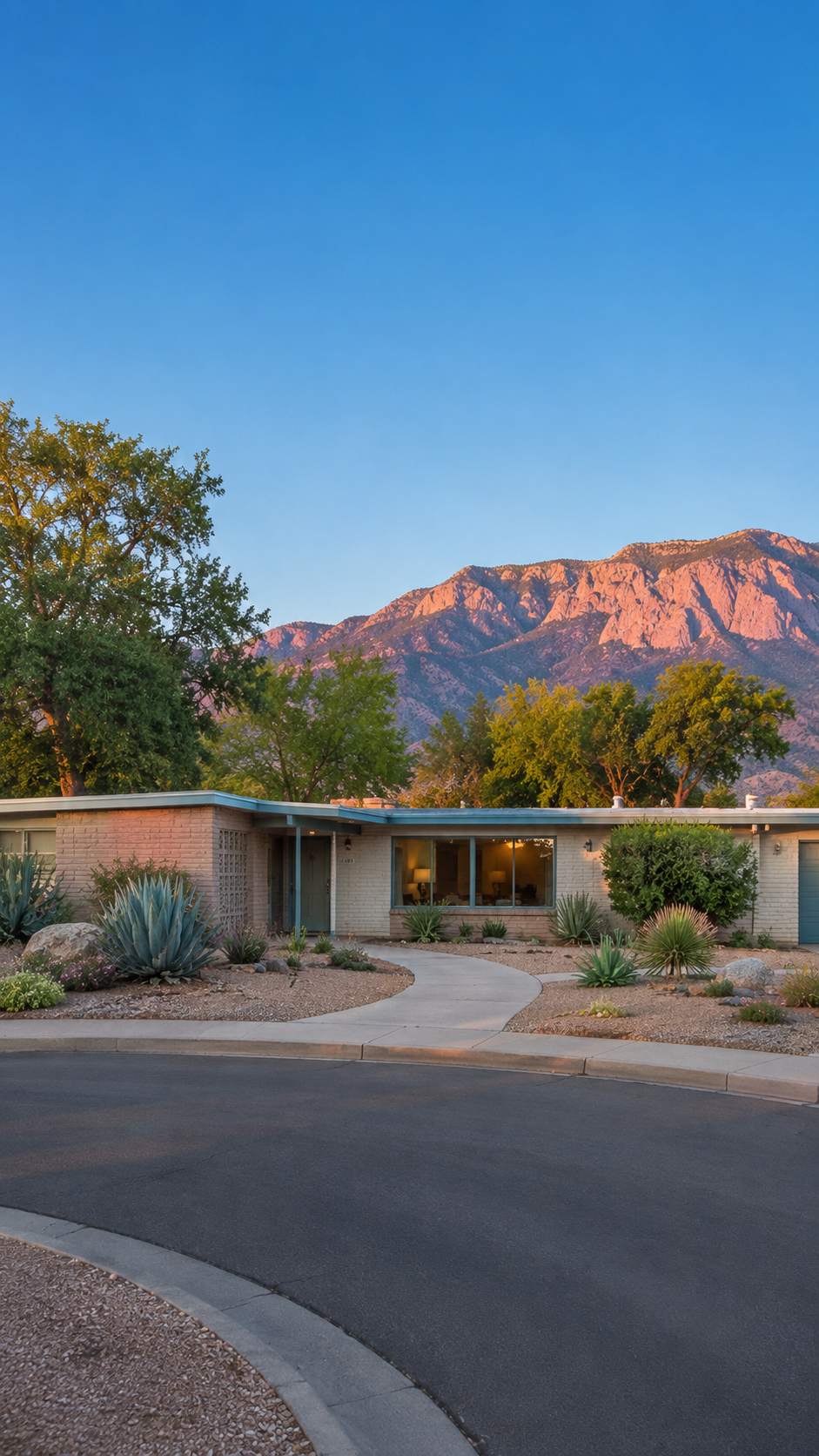
Some neighborhoods are time capsules. Princess Jeanne Park is a time capsule of an entire mood: postwar Sun Belt optimism, preserved in Formica and mahogany.
Builder Dale Bellamah named the community for his wife, Jeanne, and by the late 1950s his firm ranked among the largest homebuilders in the country. Princess Jeanne Park was his biggest project, with around 1,600 homes across more than 300 acres in Albuquerque's Northeast Heights. He gave it curvilinear traffic-calming streets, a pool, tennis, a community center, shopping, and schools, then filled the houses with the modern conveniences of the moment, from intercoms to garbage disposals.
The result is a fully planned "home for everyman" community that still reads today almost exactly as it did when it opened. For buyers who want the modernist lifestyle without a museum-piece price tag, this stretch of Albuquerque is one of the most livable entry points in the Southwest.
5. Kiestwood, Dallas (Oak Cliff), Texas
Just southwest of downtown Dallas, in Oak Cliff, sits the largest intact concentration of 1950s ranch-style homes in the city. Kiestwood holds more than 400 of them, on generous lots, close enough to downtown to make agents raise an eyebrow at how quietly it has stayed under the radar.
The homes here run to mid-century ranch and contemporary designs, with a nod to the Charles Dilbeck influence that runs through Dallas's postwar building boom. The neighborhood organized early through its own historical homeowners association, and preservation-minded Dallas realtors have championed it for years, even without a formal city historic district in place.
For now, Kiestwood remains one of those enclaves that feels like a secret: well preserved, walkable to the city, and priced within reach. That combination rarely lasts.
Finding your specialist
Here is the challenge with neighborhoods like these. A great mid-century modern home is only as good as the agent who understands it, its unique quirks, and its unique challenges. The difference between a post-and-beam Rummer and a conventional ranch is not obvious to every agent, and most agents simply analyze them against “typical” homes of similar size, bedroom/bathroom count, etc. But, these are not “typical” homes, and getting the correct valuation, the proper inspections, and the authentic story takes someone who knows the architecture and style cold.
That is exactly why MCM Authority exists. We are a concierge service that connects mid-century modern buyers and sellers with vetted local specialists who actually know these homes and these neighborhoods. The service is free to you, and it starts with a short conversation about what you are looking for.
Ready to find your mid-century home? Get matched with a local MCM specialist.
